Hurry, only 0 item left in stock!
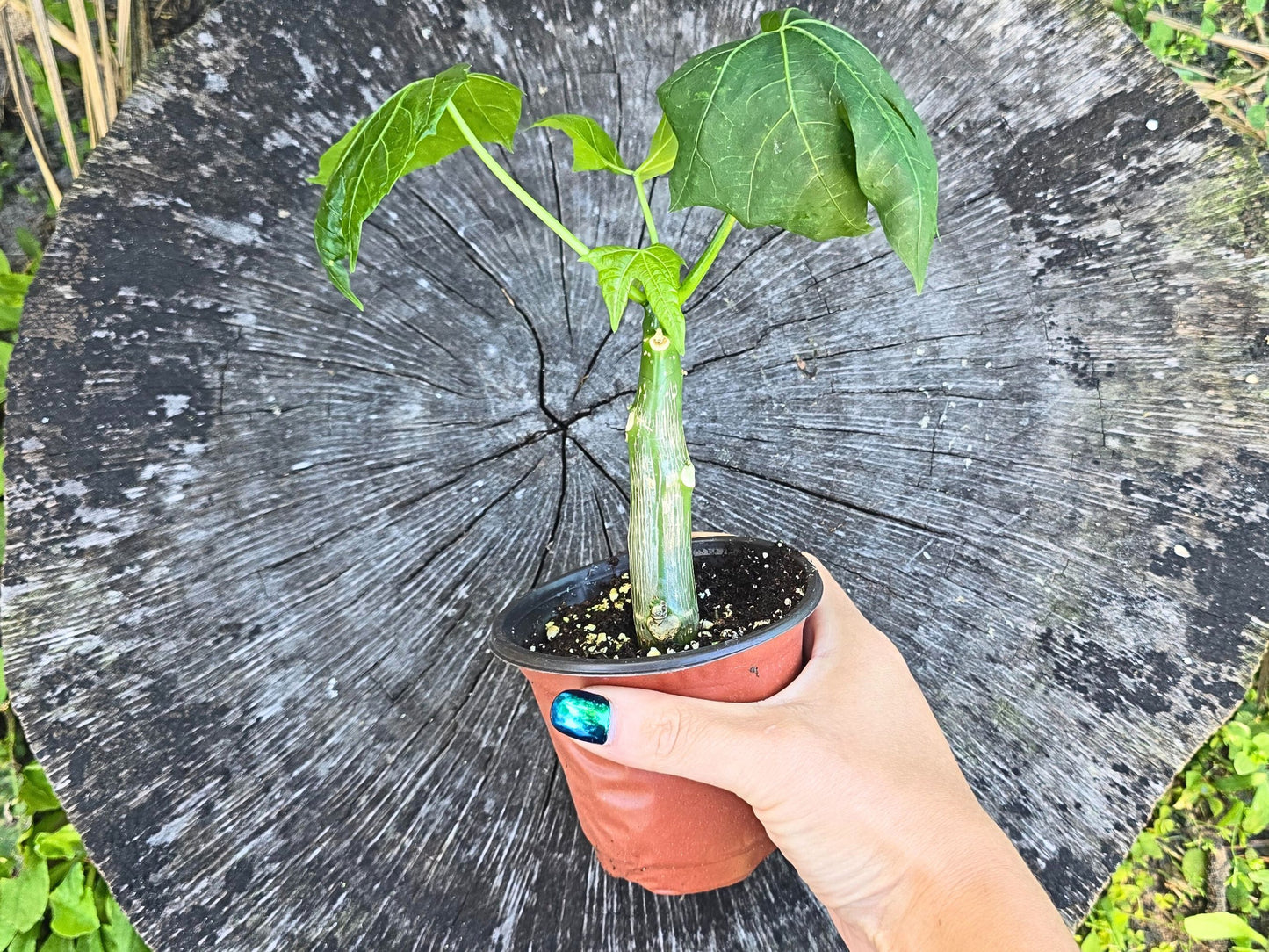
Chaya Live Plant – Tree Spinach Perennial Edible Green for Tropical & Florida Gardens
Cnidoscolus aconitifolius
Also called: Miracle Bush, Mayan Tree Spinach
Listing is for 1 starter plant grown in a 4 inch pot. Check out my YouTube video "Live Plant Care Guide & Delivery Unboxing for my Customers" for further instructions on what to expect with your live plant delivery and care tips: https://youtu.be/BmPw4rKLwDk
Chaya (Cnidoscolus aconitifolius), often called “tree spinach,” is one of the most valuable perennial edible greens for hot, tropical, and subtropical climates — and the variety I offer is especially special. Unlike the more common serrated-leaf chaya, this is a broad-leaf, large-leaf selection that produces beautiful, substantial greens perfect for cooking. Even better, it is a stingless variety, meaning it does not produce the irritating stinging hairs that many chaya plants have — so you can harvest the leaves comfortably without needing gloves, making it far more user-friendly for home gardeners.
Chaya has deep historical roots, dating back to the ancient Mayan civilization, where it was grown as a highly nutritious staple green. Native to Central America and widely eaten in Mexico today, chaya leaves are traditionally boiled and enjoyed like collard greens or used to wrap tamales. This plant thrives through Florida summers with exceptional resistance to heat, humidity, drought, and pests, producing an incredible amount of nutrient-dense greens — USDA studies have even shown chaya can yield more edible greens per square foot than almost any other vegetable crop. Chaya is easy to maintain with simple pruning, grows into an attractive shrub about the height of a person, and reliably resprouts even after storms or cold damage. A must-grow perennial green for gardeners who want a reliable summer spinach substitute that keeps producing year after year.
During my permaculture training at Finca Tierra in Costa Rica, I saw chaya planted heavily around tilapia ponds, where it was used as a high-protein supplemental feed specifically for tilapia. I cannot comment if chaya can be used to feed other types of fish.
⚠️ ⚠️Caution⚠️ ⚠️Chaya leaves must always be cooked for at least 20-30 minutes before eating to remove naturally occurring compounds that can make you sick or cause stomach upset. DO NOT EAT THE LEAVES RAW. I harvest the leaves, wash, and then boil in a large pot (make sure its not an aluminum pot or it will react). After 30 minutes, I drain the leaves out of the water, and chop into fine pieces so it can be easily added to recipes like soups, stir-fries, sautés, and casseroles.
How To Grow & Ideal Growing Conditions
USDA Hardiness Zones: 9B-13
Protect young plants if temperatures drop below 50F. Once established they can endure colder temperatures, preferably nothing below 30F. In intense freezes, the upper foliage may die back but the plant will sprout new growth in spring. This plant will not survive if planted outdoors in areas where the ground freezes or it snows.
Perennial evergreen shrub: In cooler weather it can drop leaves and the upper foliage might die back.
Sun: Full sun or partial shade
Mature size: Mature plants reach 8-12FT tall. It can be pruned all the time to maintain height and encourage growth of new tender leaves.
Soil: Grows well in poor soils, like my Florida native sandy soil. Does not require soils that are high in fertility or organic matter.
How and When to Fertilize: Add some organic granular fertilizer into the planting hole to give it a boost. Then fertilize in small doses about once a month to help the plant get established. Once mature, you dont need to fertilize, except maybe a few times in spring to encourage new growth.
How To Prune: This plant can be heavily pruned. Regular pruning after harvesting a lot of leaves helps reinvigorate the plant so it grows a new flush of fresh tender new leaves.