Hurry, only 23 items left in stock!
Golden Yellow Chinese Celery Seeds – Heirloom Asian Vegetable, Open Pollinated, Non-GMO, Kintsai for Stir Fry & Soups
Apium graveolens var. secalinum
Listing is for 1 packet of minimum 25 seeds
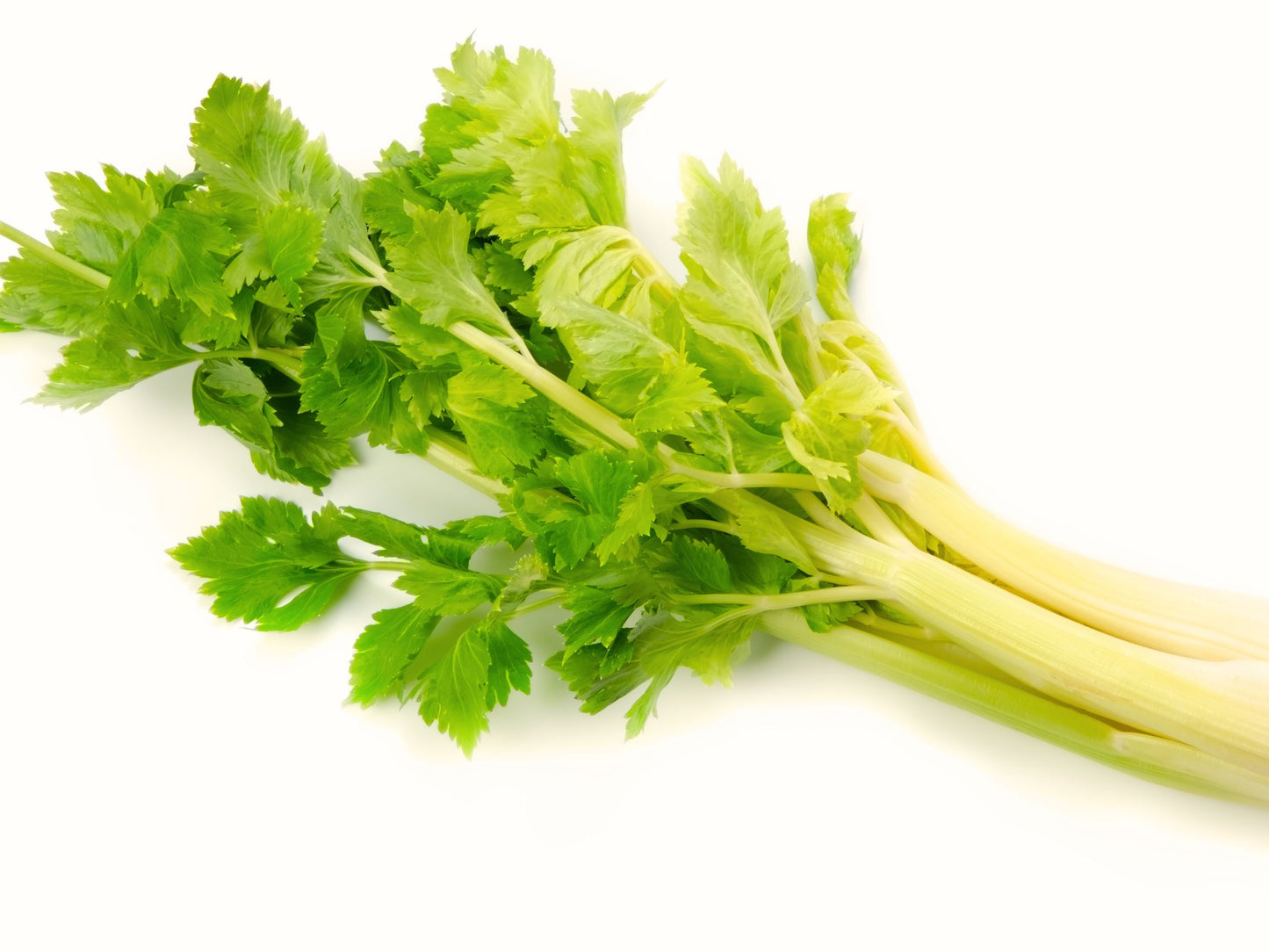
Chinese celery has been a cornerstone of Asian cooking for centuries, and the Golden Yellow variety stands apart from its green counterpart with its striking pale yellow stalks, frilly leaves, and bold, aromatic flavor that Western grocery-store celery simply can't match. Known by many names across Asia — Qin Cai (芹菜), Kinchay, Kintsai, Khuen Chai — this variety is smaller and more slender than conventional celery, with a stronger, more pronounced, slightly peppery flavor that works as much like an herb as a vegetable. The hollow, delicate stalks are less fibrous than other celeries, and both stalks and leaves are fully edible and loaded with flavor. Plants reach 10–12" tall and thrive under cut-and-come-again conditions, making them perfect for container growing — raised beds, patio pots, or a kitchen herb garden. In the kitchen, Golden Yellow Chinese celery shines in stir-fries, soups, noodle broths, and steamed fish dishes — in China, celery is sometimes served as a dish by itself, stir-fried simply with soy sauce and a touch of sugar.
Ideal Growing Conditions
Sun: Does best getting 6 hours of sun a day
Water: Keep the soil consistently moist. Not drought tolerant.
Fertilizer: Add some blood meal into the planting hole before transplanting or work some into the soil before direct sowing seeds. Continue to fertilize with something high in nitrogen every 3-4 weeks.
When & How To Sow Seeds: For a fall/winter crop: Direct sow the seeds when you start planting your fall garden and continue to sow seeds throughout winter. Celery can handle light frosts but protect with frost protection covers if temperatures are expected to drop below 28F. Direct sowing is the easiest method. Rake some blood meal into the soil to give celery a nitrogen boost. Sprinkle a few seeds over the soil surface, pat down so they make contact with the soil, and do not cover wih soil as celery seeds require light to germinate. Keep the soil moist and it will germinate quickly. For a spring crop: direct sow seeds once you are past your last spring frost date.
Germination: 7-14 days
Days To Maturity: 60-70 days after direct sowing the seed
How & When To Harvest: Celery is ready to harvest when the stalks are about 8–12 inches tall, firm, and a good bright green—usually around 85–120 days after planting, depending on the variety. To harvest, you can either cut individual outer stalks as needed, letting the inner ones keep growing, or cut the whole plant at the base just above the soil line. For the best flavor and texture, pick celery before it gets too old, since over-mature stalks can become tough and stringy.
Common Diseases: Fungal leaf diseases like blight and leaf spot can sometimes be an issue especially in wet conditions. Proper plant spacing to improve air flow, not watering overhead, and pruning out excess foilage helps. Spray with 1 cup of 3% hydrogen peroxide per gallon of water every 3 to 5 days until you notice the spread has stopped.
Common Pests: Aphids often cluster on tender stalks and leaves, sucking sap and spreading disease—treat them by spraying plants with a strong stream of water, insecticidal soap, or neem oil. Armyworms and cutworms may chew through young seedlings or hollow out stalks; protect plants with collars around seedlings and hand-pick caterpillars if you see them. Leaf miners create squiggly trails inside celery leaves; simply remove and destroy affected leaves to stop the larvae. Slugs and snails may also munch on tender growth in damp conditions—control them with traps, diatomaceous earth, or by reducing excess moisture.
Do I have a YouTube video tutorial on how to grow this? Not yet
Additional Tips/Information: N/A