Hurry, only 24 items left in stock!
Mini Purple Daikon Radish Hybrid Seeds – Vibrant, Crunchy, Fast Maturing Japanese Radish Seeds
Raphanus sativus
Listing is for 1 packet of minimum 50 seeds
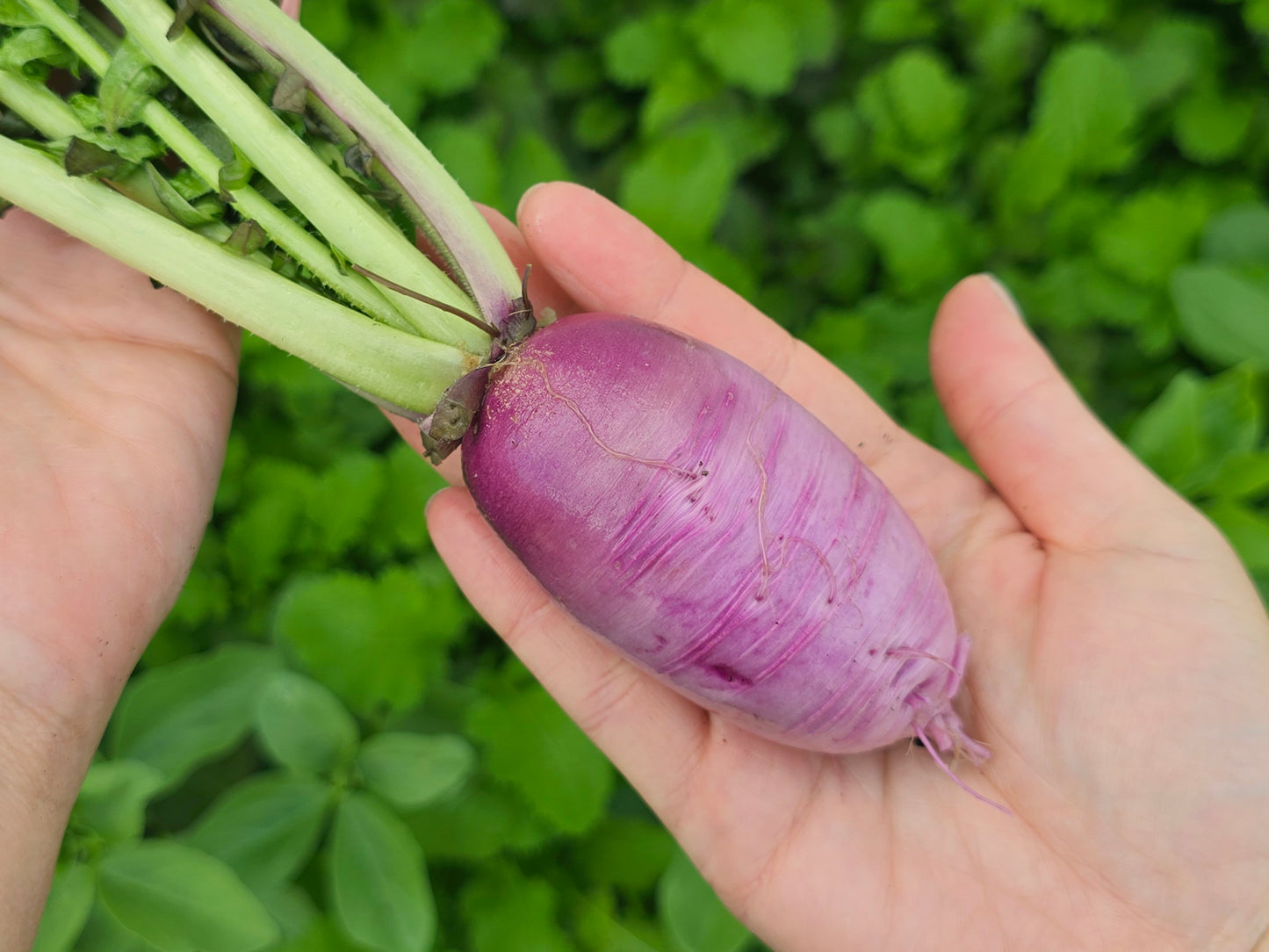
Add a burst of color and flavor to your garden with Mini Purple Daikon Radish seeds! These plump, mini daikons grow 3 to 5 inches long and have beautiful deep violet skin with crisp, crunchy flesh that shows off a purple sunburst in the center. Their flavor is mildly spicy with a hint of sweetness, and it gets even sweeter when cooked. Great for raw snacking, roasting, pickling, or fermenting! These compact roots are easier to grow and harvest than traditional daikons, and they thrive in full sun with well-drained soil. Fast-growing and fun to grow—perfect for home gardeners!
Ideal Growing Conditions
Sun: Full Sun
Water: Allow the soil to dry out a little bit in-between watering
Soil & Fertilizer: Prepare the soil by mixing in compost and a balanced fertilizer. Once seedlings emerge, side-dress with phosphorus and potassium rich fertilizer every few weeks, and avoid high-nitrogen fertilizers, which can lead to lush tops but small roots. Stop fertilizing once the roots begin to size up for harvest.
When & How To Sow Seeds: Direct sow seeds after your last spring frost date or in fall when you plant your fall garden. Garden zones 9 and up can direct sow seeds from fall through winter. Follow square foot gardening guidelines and plant 9 per square foot. Or if growing in rows, space them 6 inches apart in rows that are 3 feet apart.
Germination: 7-10 days
Days To Maturity: 50 days after direct sowing the seed
How & When To Harvest: When you notice the top of the daikon/radish sticking out of the ground, push the soil back and check how wide the top is. Harvest if the top is 1 1/2 to 2 inches in diameter or more.
Common Diseases: The most common diseases when growing daikon are downy mildew, root rot, and bacterial soft rot. Downy mildew appears as yellow or brown spots on the leaves and thrives in cool, damp conditions—improve air circulation, avoid overhead watering, and spray with 1 cup of 3% hydrogen peroxide per gallon of water. Root rot, often caused by overly wet or compacted soil, can be prevented by ensuring proper drainage and avoiding overwatering. Bacterial soft rot causes the roots to become mushy and foul-smelling; this can be minimized by harvesting promptly, rotating crops annually, and avoiding injuries to the roots during growth. Practicing good garden sanitation and crop rotation is key to preventing most soil-borne diseases.
Common Pests: Common pests that affect radish include flea beetles, root maggots, and aphids. Flea beetles chew small holes in the leaves, which can stunt young plants—protect seedlings with row covers and apply neem oil or diatomaceous earth if needed. Root maggots, the larvae of certain flies, tunnel into the roots and can ruin the crop; prevent them by rotating crops, and using row covers. Aphids cluster on leaves and stems, sucking sap and spreading disease—treat with insecticidal soap or a strong spray of water. Consistent monitoring and early intervention are key to keeping these pests under control.
Do I have a YouTube video tutorial on how to grow this? Yes, watch it here: https://youtu.be/YJhi0G8MRDg
How to make Korean style pickled daikon, cucumber, and carrot: https://youtu.be/h61XMRx9TDw
Additional Tips/Information: N/A