Hurry, only 0 item left in stock!
Pink Lemonade Blueberry Plant– Rare Low Chill Pink Blueberry Variety
Vaccinium 'Pink Lemonade'
Listing is for one rooted plant. Plants are grown in 72 cell trays so that they will be rooted but small enough for efficient shipping. Check out my YouTube video "Live Plant Care Guide & Delivery Unboxing for my Customers" for further instructions on what to expect with your live plant delivery and care tips: https://youtu.be/BmPw4rKLwDk
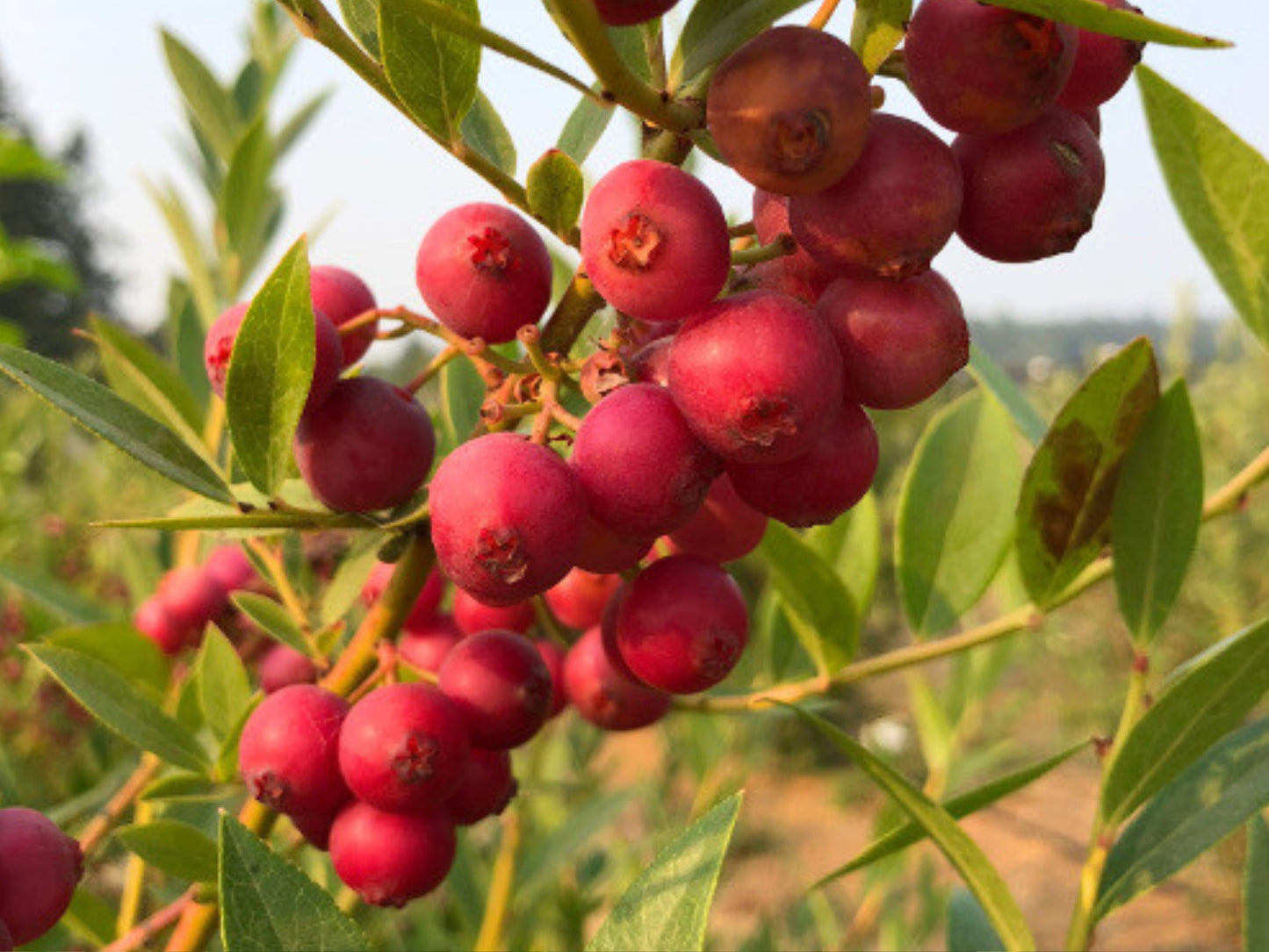
The Pink Lemonade Blueberry is a truly unique and eye-catching rabbiteye blueberry variety that produces bright pink blueberries instead of blue, making it as ornamental as it is delicious. This early-season, low-chill variety requires just 200 chill hours, making it an excellent choice for gardeners in warmer climates. Rabbiteye blueberries are known for their vigor, heat tolerance, and long lifespan, and Pink Lemonade is no exception—growing into a productive shrub about 5–6 feet tall. The berries are exceptionally sweet, often described as nearly twice as sweet as traditional blueberries, with a subtle tropical twist and firm, juicy texture perfect for fresh eating, baking, smoothies, and desserts. While Pink Lemonade is self-fertile, planting a second Pink Lemonade or another rabbiteye variety will increase fruit size and yields. This variety thrives in full sun and well-drained, acidic soil, produces beautiful white-to-pink spring flowers, and continues fruiting well into fall, making it a standout edible and ornamental plant for any fruit garden.
Ideal Growing Conditions
USDA Hardiness Zones: 5-9
Cold Chill Hour Requirement: This variety is considered a low chill hour blueberry. It requires a minimum of 200 cold chill hours per winter season to produce properly in spring. Don't know how many cold chill hours your area gets per winter? Search your zipcode on
www.agroclimate.org/tools/chill-hours-calculator to get an estimate.
Deciduous shrub: during the fall the leaves will turn orange/red and then fall off during the winter.
Mature size: Mature plants reach 5-6FT
Sun: Full sun is best for maximum growth and production
Soil: Grow best in well-draining, acidic soil with a pH between 4.5 and 5.5. Use a mix rich in organic matter, such as peat moss, pine bark fines, composted pine needles, or an acid-loving plant mix designed for blueberries, azaleas, or camellias. Avoid heavy clay or poorly draining soils, as blueberries have shallow roots that are sensitive to standing water. Adding mulch like pine straw or wood chips helps maintain soil acidity, retain moisture, and keep roots cool. If the soil pH rises too high, the roots become nutrient locked, meaning the plant can no longer absorb essential nutrients—this causes yellowing leaves, poor growth, and can eventually lead to plant decline. Using a soil acidifier helps maintain the proper pH and prevent this issue. Many gardeners find blueberries are easier to grow in large containers filled with acidic, acid-loving plant soil, which makes maintaining the correct pH much more manageable.
Water: Monitor young plants and keep consistent water.
How and When to Fertilize: Blueberries must be grown in acidic soil to stay healthy and productive. Fertilize in early spring as new growth begins using a fertilizer formulated for blueberries or acid-loving plants, and reapply lightly through the growing season if needed.
How to prune blueberry plants: Prune blueberry bushes in late winter to very early spring, while the plant is dormant and before new growth begins. Remove any dead, damaged, or crossing branches, and thin out a few of the oldest canes to encourage fresh, productive growth. In the first year or two, pruning should be minimal—focus on letting the plant establish strong roots and structure before heavier pruning in later years.