Hurry, only 0 item left in stock!
Calabaza Squash Seeds | Caribbean Pumpkin | Heirloom Winter Squash | Tropical Garden Seeds
Cucurbita Moschata
Listing is for 1 packet of minimum 10 seeds
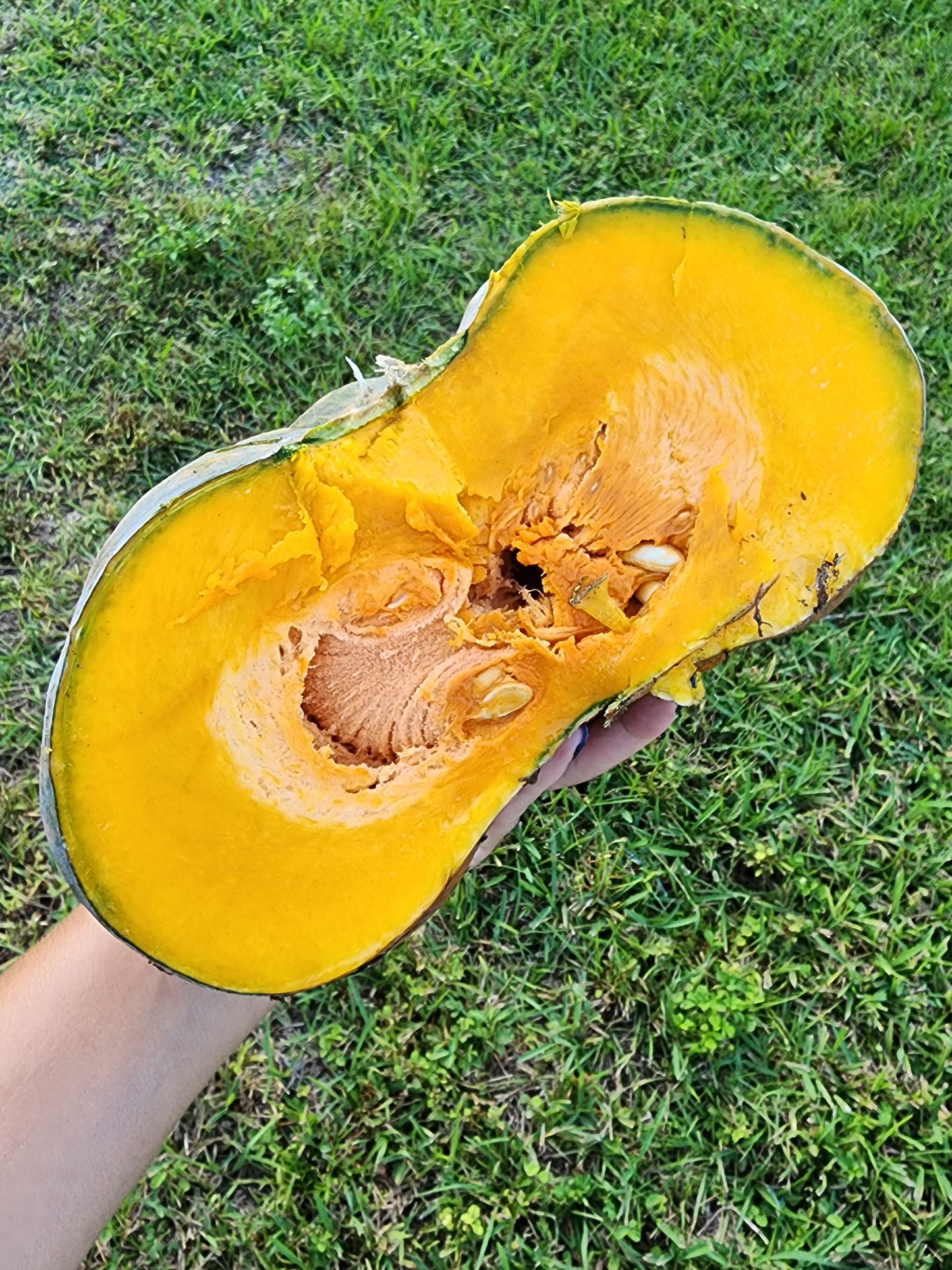
I grew up eating a lot of calabaza squash since my family is from the Dominican Republic and it is native to the Caribbean. It is similar to butternut squash, although technically a pumpkin or winter storage squash. It is a pretty tough cultivar as it handles a decent amount of heat and pest pressure. It is native to South America, the Caribbean, and the Philippines. It can be dark green or beige in color (lots of varience in final color), when ready to harvest. You know they are ready to harvest when the stem that connects the pumpkin to the vine is dried out. In Florida, I am able to grow it twice a year. I direct sow seeds mid February as soon as my last average spring frost date has passed. Then I direct sow more in August. It is a tropical plant and does not like cold weather. It will attract squash bugs and worms so be prepared to spray with BT or preferably, spinosad. It can take a lot of pest damage before actually being affected and grows great in poor soils like Florida native sandy soil. Vines get huge, easily sprawling over 20 feet long, and produce several nice size pumpkins.
HOW TO GROW FROM SEED
Sun: Full sun
Water: Let the soil dry out a little bit in-between watering
Fertilizer: Consistent applications of fertilizer is important to promote lots of new, healthy, green growth to outpace the diseases and pests. Amend the soil with some organic granular fertilizer like Espoma Garden-Tone before direct sowing the seeds. Or sprinkle some into the planting hole if using transplants. Apply 1/4 cup of this fertilizer every 10-14 days to keep the nutrient supply consistent. I don't recommend using a synthetic fertilizer when fertilizing this frequently.
When & How To Sow Seeds: For a spring crop, direct sow the seeds after your last spring frost date. If you are a hot climate gardener (areas with no snow - its better to direct sow the seeds 2 weeks BEFORE your last spring frost date to get an early start on the season. Just protect seedlings from the last few cold fronts that might move into your area. For a fall crop, direct sow seeds at minimum, 4 months before your first winter frost date. Sow 2-3 seeds in a mound, 1/2 inch deep, spaced 2FT apart, in rows spaced 3FT apart. Can also sow seeds indoors in 4 inch pots, 6-8 weeks before your last spring frost date to get an early start.
Germination: 5-10 days
Days To Maturity: 90-120 days after direct sowing the seed
How & When To Harvest: Calabaza squash is ready for harvest when the woody stem piece that attaches it to the vine is dried out and turned brown. Do not depend on color cues because the rind color at maturity can range from dark green to tan.
Watch this video clip to learn how to hand pollinate squash flowers: https://youtube.com/shorts/3z7WTkeUCYc
Common Diseases: Squash get a lot of leaf diseases caused by pathogens like molds, fungus spores, bacteria etc.... It is very common, so dont worry. Spray with 1 cup of hydrogen peroxide per gallon of water to clean and disinfect. Repeat every 5 days or so as a preventative, or until you notice the spread of the disease has stopped.
Common Pests: Critters like rabbits love to munch on newly germinated seedlings, so protection from small animals might be required. If you notice the leaves are chewed up and there are small black, green, or orange balls, worms/caterpillars are chewing up the plants. Spray with BT or spinosad to treat for the worms.
My Recipes That Use Calabaza or Pumpkin
Beans With Calabaza Squash (can use any type of butternut squash, calabaza, or Seminole pumpkin for this recipe)
Creamy Bacon Pasta (can use any type of butternut squash, calabaza, or Seminole pumpkin for this recipe)
Roasted Pumpkin and Red Pepper Soup
Hearty Squash, Sausage, Kale, and Lentil Soup
Guandules Guisados con Calabaza // Pigeon Peas Stewed With Seminole Pumpkin